Film Review: "The Further Mis-Adventures of Cliff Booth"
A freshly-facelifted Brad Pitt drinks himself silly as he beats twinks and foreigners in an AI-riddled Fincher/Tarantino hate child of a picture.
Quentin Tarantino clearly thinks that Cliff Booth is the coolest guy in the universe. He races classic cars at the demolition derby, takes the punches that movie stars can’t afford to, racks up sex with beautiful women like it's light work—sometimes in widely-seen pornos—and slings tiki drinks to the rapturous reception of an audience that adores him. David Fincher, on the other hand, has a more apt read of Brad Pitt’s Oscar-winning role: that he’s a loser; a bum who burned out half a decade ago when he lost his free ride from a buddy who got wise that he didn’t need the dead weight anymore. Now, Cliff does the dirty work around Hollywood that nobody else cares to. Where does Brad Pitt fit into all this? Who could really say, but I’d hedge my bets that he’s so desperate to resurrect his public image that he dug through his own IMDb page looking for anything he could give the Top Gun: Maverick treatment, and this was as good as it was going to get.

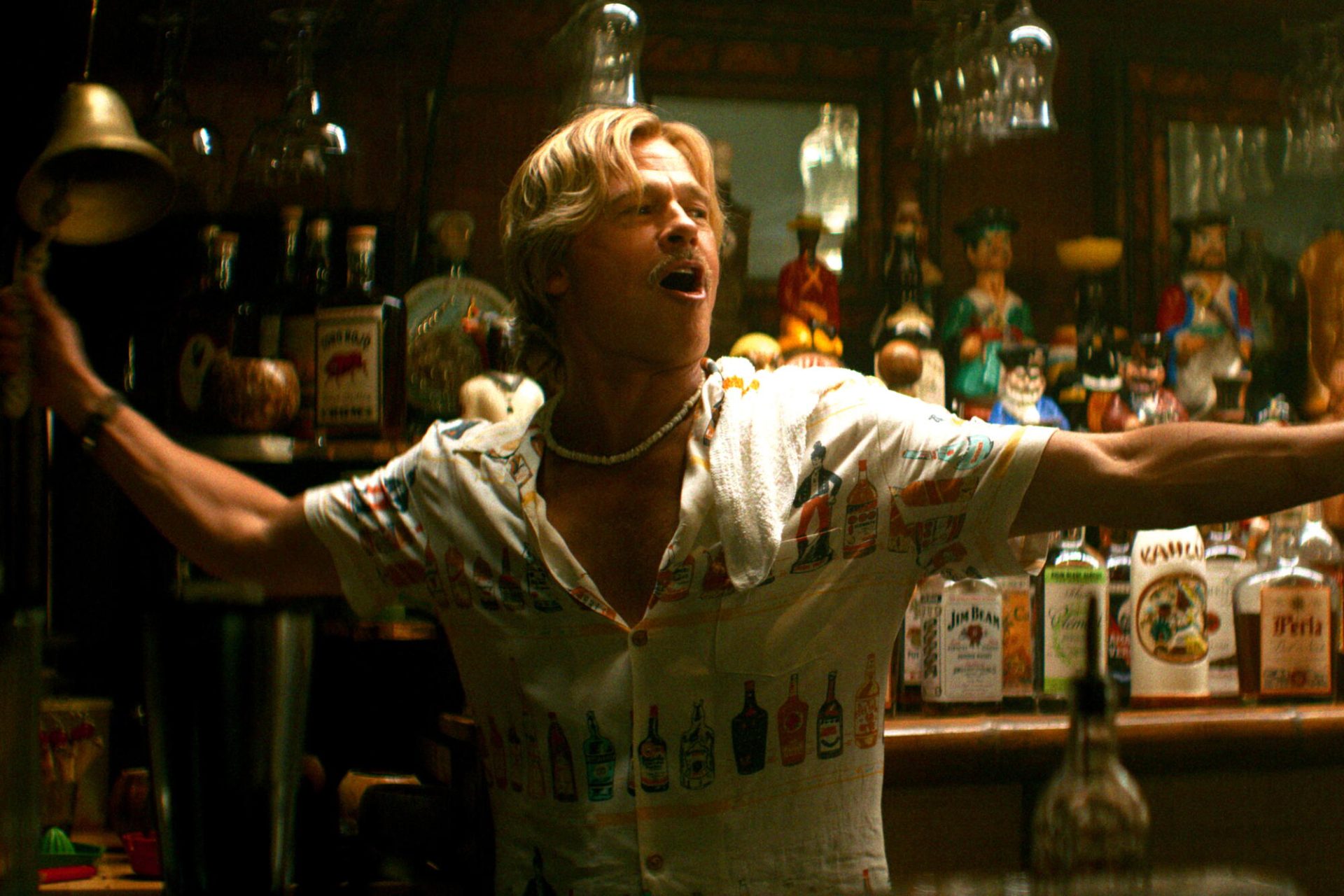
For a film where the plot doesn’t get off the ground until well past the halfway point, The Further Mis-Adventures of Cliff Booth sure is ploty. We're reintroduced to Pitt's sun-soaked stuntman almost a decade after we last saw him. Rick Dalton (Leonardo DiCaprio)—the only major player of Once Upon a Time...in Hollywood to not feature in a cameo here—has since abandoned his bummer best friend and moved to Australia, where he's found a reliable stream of work. Booth is kicking around from odd job to odd job, most notably as a late night projectionist at Tarantino's own New Beverly Cinema (featuring the Highland Theatre and Gardena Cinema as stand-ins for the iconic repertory house), and despite an endless stream of Hollywood hijinks to get into, his heart isn't in it anymore. He terrorizes a queer kid who's found himself involved in a bad grift, humiliating the poor twink with the looming fear of sexual assault before finally showing mercy and sending him out of Los Angeles on the bus back to the midwest. Then, Booth farts around Los Angeles circa 1977—reverted back to the era with production design that pales in comparison to the films predecessor—until he eventually collides with TV-star Charlie Peters (Scott Caan).
This is when the films most glaring issue comes into play: the shameless use of generative A.I. for select VFX. Caan's matinee idol is introduced through a montage narrated by Quentin Tarantino, featuring face replacement, backgrounds, and stunts all realized with new age tools. The results are poor, with muddy hands, glitchy faces, and a headache-inducing sheen to every frame. The transgression is made even more apparent when, in the middle of the sequence, we're offered a relief from the AI-onslaught and treated to a genuine recreation of the set of one of Charlie Peters shows. In the best scene of the film, Caan faces off against Timothy Olyphant—reprising his role as Jim Stacy from Hollywood—as they film a Western scene that just isn't quite coming together. When Charlie introduces a live round into the barrel of his prop revolver, he pulls a jaw-dropping performance out of Jim. It's exactly the kind of problematic Hollywood tall tale that Tarantino is known to idolize, and here it is deployed for a perfect dramatic moment that would've been a better short film than Mis-Adventures is as a feature attraction.
Cliff Booth may be written as the quintessential baby boomer, but here he is realized as the epitome of everything wrong with Fincher, Tarantino and Pitt's own Gen X. He doesn't care about anything, and you shouldn't care about their film either.
★
Kenna Wong Ghaill