He Wants to Believe
Aliens exist. At least, they do for Steven Spielberg. This has remained constant across a career defined by restless movement. Spielberg has spent 60 years making films about different subjects, and just as long returning to the same questions.
This fascination reaches back to 1964 in Phoenix, Arizona, when Firelight, Spielberg’s largely lost amateur debut, screened once to a few hundred locals. The reels were lost while on loan to a production studio—or so the legend goes. The film followed the residents of a small town grappling with the aftermath of a UFO encounter. By all accounts, the extraterrestrials in this film were hostile, bringing disruption to those who witnessed them, not salvation.
Somewhere between Firelight and Close Encounters of the Third Kind (1977), something changed for Spielberg. The unknown ceased to be something that must be survived and became something that must be understood. By the time Roy Neary (Richard Dreyfuss) sees a flying saucer with his own eyes, he is far more curious than afraid.
Close Encounters hardly resembles other science-fiction films of the time. Spielberg preferred the term “science speculation,” and that distinction seemed important to him at the time. The popular science fiction of the 1970s was fixated on futurism and existential paranoia. Close Encounters is fixated on faith. Roy Neary is agnostic, and then he converts. His religious awakening comes in the form of a vision, and he becomes obsessed. His family and career collapse under the weight of this revelation. What he believes is dismissed by those around him. In defiance of that, he arrives at a holy place and ascends. With this film, Spielberg departed from the tradition of alien-centric movies by making them about whether we deserve contact, not whether or not we can survive it.
Five years later, in E.T. the Extra-Terrestrial, the visitor from another world is no longer a massive machine bathed in celestial light. He is stranded and frightened, but still boundlessly curious. If Roy spends his film trying to leave home for the heavens, Elliott (Henry Thomas) spends his trying to help heaven get home. Although the religious allusions remain in E.T.’s miracles and resurrection, Spielberg’s interests are beginning to shift. He is wondering less about whether or not there are others like us. Rather, he is unsure if we are capable of the compassion required to embrace them. For all their differences, Roy and Elliott arrive at the same conclusion: these visitors are not something to fear.
Maybe that’s why Spielberg’s films feel so different from every other alien movie, even if he borrows their imagery as much as he invents the imagery they will borrow in return. His films have always been concerned mostly with empathy—an unbelievably literal theme in his newest film, Disclosure Day. An encounter with an extraterrestrial in a Spielberg film is a test for his characters. When faced with something incomprehensibly different from ourselves, will our survival instincts lead us to reject them as something beneath humanity, or will we embrace them as another one of God’s supreme creations?

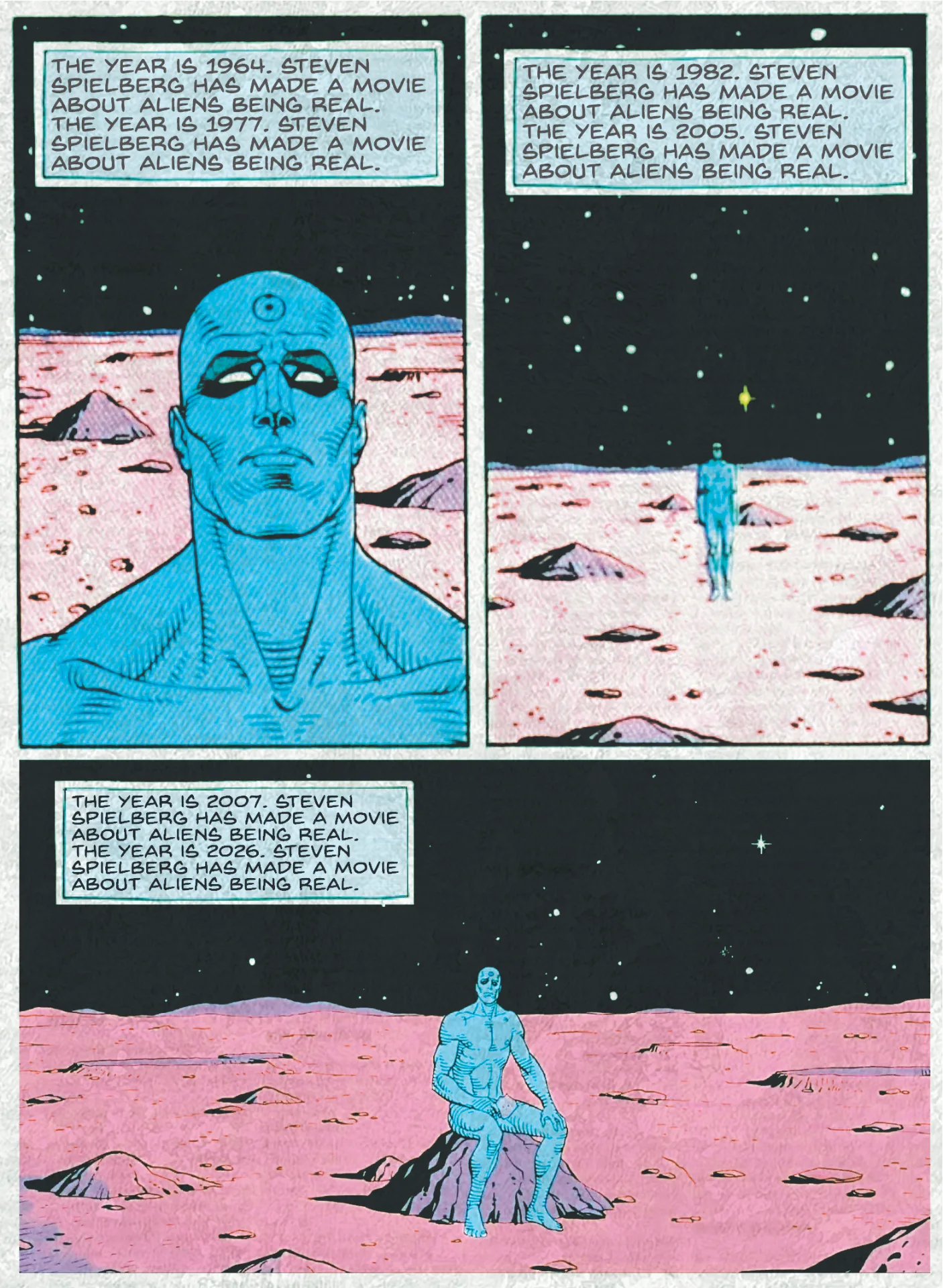
Spielberg is no stranger to believing that there is something greater than humanity in the universe. He has been forthcoming about believing in a higher power from an early age, even when he was embarrassed to admit it. It’s clear that he either believes in intelligent life on other worlds, or he desperately wants to.
The aliens of Spielberg’s films descend from the heavens, but they are not gods. They are travelers, searching for us as we search for them, as curious about us as we are about them. Although this reciprocity is a defining feature of Spielberg’s extraterrestrials, at times his belief has not wavered but has been recontextualized.
In 2005’s The War of the Worlds, the aliens are not benevolent informers. Instead, they are foot soldiers on a holocaustal mission. They blindly follow orders from unseen leadership, decimating souls without hesitation. When we finally see an alien in the flesh and not in a massive war machine, it is a vicious, hostile predator. Its eyes pierce through the fourth wall toward the audience, with no resemblance to the empathy seen in E.T. 30 years prior. The unknown has become the enemy, but importantly, the unknown is still matter of fact. And the malevolent killers are still little gray men with pointy heads and big, black eyes. In fact, E.T. is Spielberg’s only alien to not bear the classic Roswellian aesthetic.
What changed? The easiest answer is 9/11 and the war on terror. The better question is when did Spielberg’s heart change back? A few years after War of the Worlds, Spielberg had more to say on the matter of visitors from other planets. Indiana Jones and the Kingdom of the Crystal Skull, first subtitled ...and the Spacemen from Mars during development and early drafts, finds America’s favorite archeologist faced with proof of alien life and desperate to reject it. Irina (Cate Blanchett) spends the film seeking absolute understanding, convinced that enlightenment will grant her power. Instead, it destroys her. Coming face to face with this interdimensional being summons a holy penance similar to the opening of the Ark of the Covenant in 1981’s Raiders of the Lost Ark. What happens when ordinary people receive proof that the universe is larger than they can understand? Will it destroy them, like Irina? Will it humble them, like Roy?

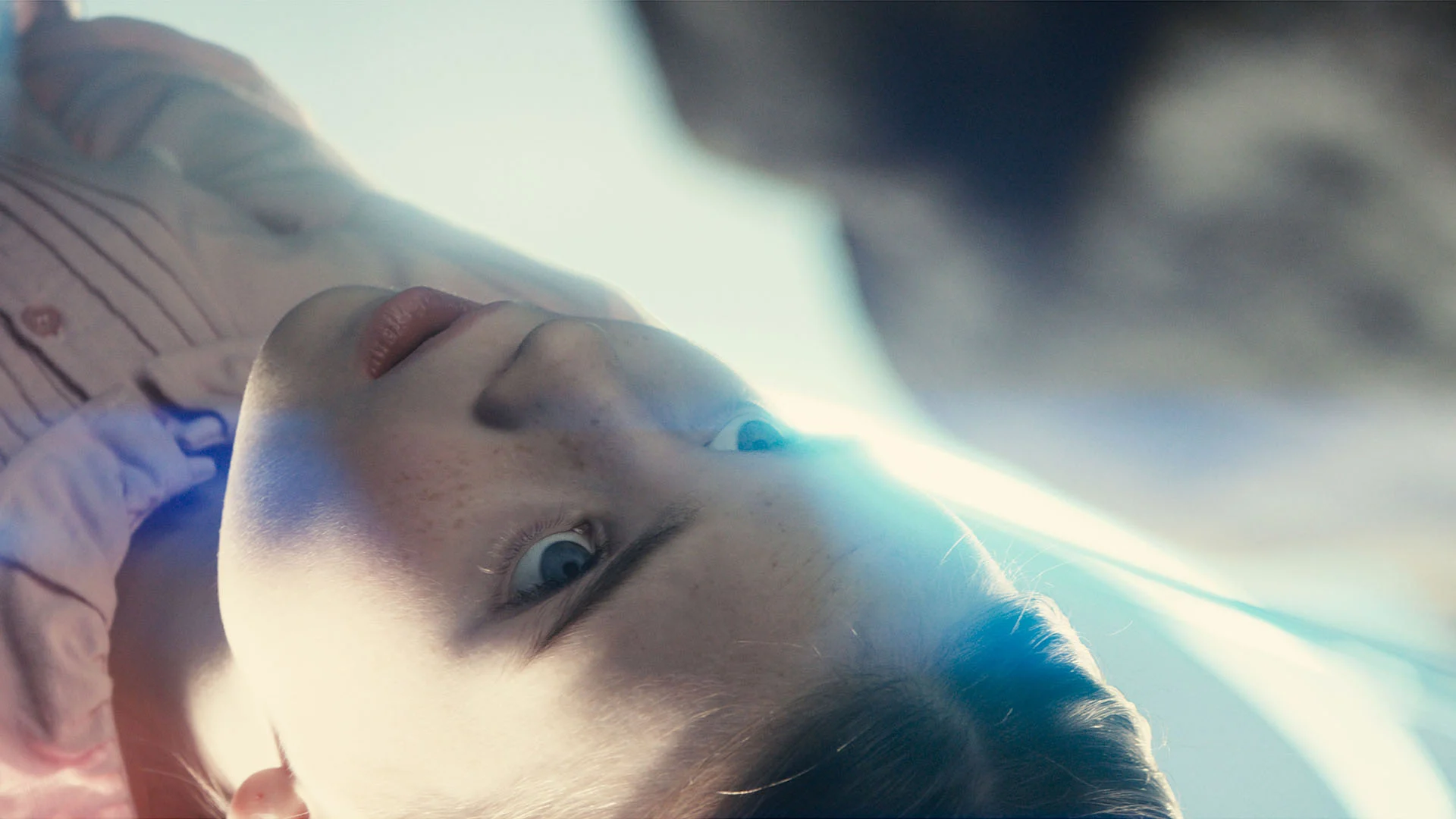
By the time 2026’s Disclosure Day arrived, Spielberg was less interested in the encounters than in the aftermath. Contact is assumed, not questioned, and at least some revelations have already happened. The world as we know it and humanity’s place within it have already changed, and we’re living in a new world whether we want to recognize that or not.
Spielberg has spent six films wondering what it will be like when we are finally confronted with an otherworldly being that we must unrefutably believe has a soul. When the closing moments of Disclosure Day unfold, there are 60 years of Spielberg’s fiction behind it. The aliens of this film are gentle and brittle, and in their eyes is something unknowable but familiar all the same.
For decades, Spielberg imagined the arrival. He imagined the lights in the sky, impossible shapes descending from the heavens, and the panic and wonder they’d bring with them. What interested him was never whether they existed. It has always been what their existence would reveal about us.
Disclosure Day proposes that contact has already happened, that the miracle is behind us. Spielberg is still asking the same question he has been asking since Firelight screened in Phoenix 60 years ago. When confronted with something truly other, something that forces us to expand our understanding of life itself, will we respond with fear or with empathy?
Kenna Wong Ghaill
First published in The Ardent magazine's July 2026 issue.
Edited by Meghan O'Dell.