Projecting Power
“I think it would be fun to run a newspaper,” Hollywood’s boy wonder, Orson Welles, casually quips in Citizen Kane. He is about to discover that controlling information means controlling reality, and he will wield it like an infinity stone. He will not report the news—he will author it. Manufacturing public feeling, identifying enemies, galvanizing heroes, and deciding who and what the country will fear and/or love. He learns quickly what kind of power he has found.
Charles Foster Kane was fictional, but only barely: everyone who saw the film knew Welles was portraying real-life mad titan, William Randolph Hearst, through thinly veiled satire from a script penned by Hearst’s own dinner party jester Herman Mankiewicz (recently canonized for a new generation with a performance by Gary Oldman in David Fincher’s Mank!). Hearst was a man wealthy enough to not just influence history, but also to decide what version of it people believed they were living through.
Figures like Kane appear all throughout America’s century-long cinema canon. In 1949’s Best Picture–winning All the King’s Men, populist demagogue Willie Stark (Broderick Crawford in the performance that would win him a Best Actor Oscar) rises to government-elected power through performance, not principle, building his movement one speech at a time until his massive capacity for charisma becomes indistinguishable from political competence.
The lesson that men like Kane and Stark do not only seek power but also authorship is one we have understood for a long time. These men want to shape the world and then dictate the story told about it afterward. American cinema, in its better moments, has historically rendered such men as warnings; at its worst, it has mythologized them. The difference between Citizen Kane and Triumph of the Will, between All the King’s Men and Melania, is not in the scale of the figures they depict, but in whether the camera chooses to interrogate their power or worship it.
All my adult life, Donald Trump has been at the center of American political conversation. I turned 20 one month before the 2016 election. It was the first time I cast a vote. At the time, politics still felt simple. There was an obvious villain and a presumed alternative, and then the villain won.
Time moved on. For a moment, it seemed that things might stabilize. In that moment, many people—including me—dared to emerge from our plague-induced hibernation with new names, new genders, and new identities to develop in the blossoming post-Trump, post-COVID era. Then he returned, and something stranger happened. Millions more no longer saw him as the villain. They saw him as the hero.
How did that happen? He became a hero the same way all modern heroes are made. The way Kane made himself in print; the way Stark made himself at the podium: Through image. Through repetition. Through propaganda.
The first great piece of Trump propaganda was not a film. It was a tagline. Four words, repeated ad nauseam until they lost all meaning. Make America Great Again. A promise of restoration. It doesn’t matter that it refers to a past that never existed. Propaganda does not describe reality, it describes a dream dreamed for you.
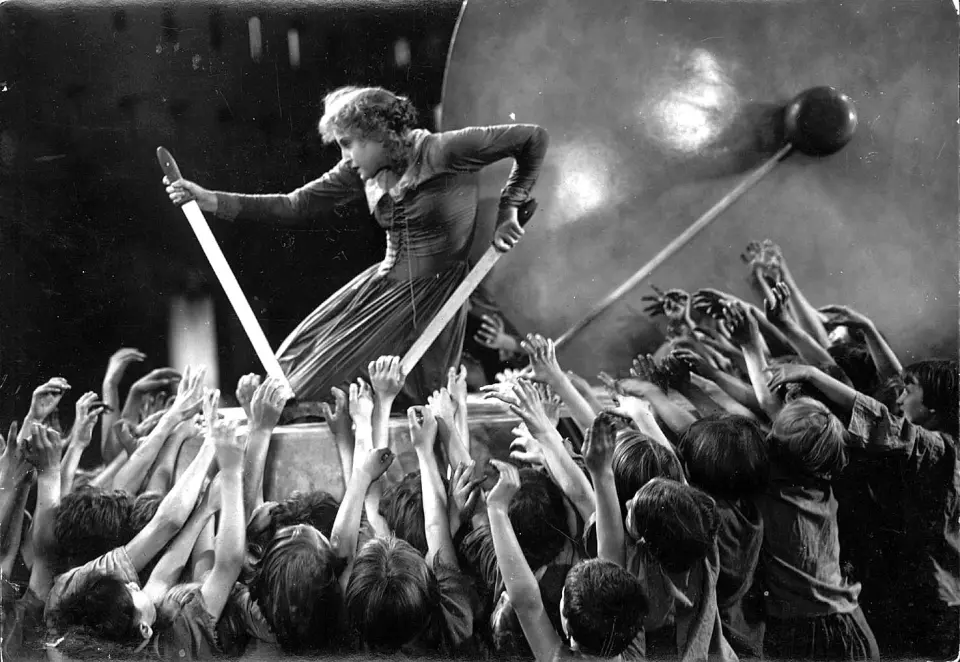
In March of 1935, Triumph of the Will premiered in Berlin. Leni Riefenstahl’s documentary transformed Adolf Hitler from politician into myth. He descends from the clouds like a god. In images seemingly plagiarized from King Kong, the crowds are adoring and endless. The film persuades through spectacle. Fascism did not invent propaganda cinema, but did it better than anyone else had ever tried, understanding that aesthetics move people faster than ideology ever could.

The Power of Spectacle
In January of this year, Melania premiered in Washington, D.C. No, the film is not Triumph of the Will. History might be like poetry: it rhymes, but it does not repeat itself so neatly. Propaganda evolves with its environment. Where fascist cinema once arrived through state ministries and mandatory screenings, it now arrives polished in pseudo-prestige packaging, distributed by corporations, wrapped in glamour and celebrity. The goal remains the same: to replace scrutiny with mythology.
Amazon reportedly spent tens of millions on the documentary about First Lady Melania Trump, an absurd amount for a vanity project. Whether explicit or merely implied, many exhibitors seemed to understand that saying no to Melania could mean friction when Amazon’s larger titles came around. No written threats—real power rarely needs to put things in writing. In All the King’s Men, Stark realizes that power is most effective when people understand the consequences before they are ever said aloud. Hearst understood this, and Kane certainly would have, too.
I attended a public screening of Melania at an AMC theater with three other people in the auditorium—by the end of the film only two of us were left to shamefully shuffle through the lobby. The movie opens with a sweeping drone shot of Mar-a-Lago, photographed with the same fetishistic awe that Riefenstahl reserved for Nuremberg. Brett Ratner places his director credit over golden-plated doors, seconds before Melania descends a staircase like a department store mannequin brought briefly to life.
What follows is 70 million dollars of hagiography masquerading as documentary. We watch her choose outfits, order designers around, interview staff, drift through tasteless gold-plated interiors while aides insist she is a brilliant tastemaker, elegant and visionary. The effect is more humiliating than persuasive. Even Triumph of the Will had the good sense to mythologize someone capable of finishing a sentence.
Trump appears mostly in fragments, barking half-finished compliments over the phone or wandering into frame long enough to call his wife beautiful before disappearing again. They don’t speak like a married couple; they hardly seem like acquaintances, yet the film insists upon their grandeur all the same. Propaganda asks you not to believe what you can see for yourself, just what you’re told to feel by those in power.
The president is ridiculous, grotesque, embarrassing. Depression-era author Sinclair Lewis predicted long ago that fascism in America would not arrive looking severe, but vulgar. His novel It Can’t Happen Here imagined tyranny wrapped in patriotism, delivered by a man foolish enough to laugh at until suddenly he is not funny anymore.
Transmitting from a different far-out era, further detached from the memory of the Reich’s media machine, Terry Southern’s novel-then-film The Magic Christian prophesized that obscene wealth, when concentrated enough, mutates into performance art. A spectacle so brazen and tasteless it ceases to offend and instead mesmerizes.
These works, alongside All the King’s Men and Citizen Kane, understood that the American demagogue is never just a tyrant; he is a showman, a salesman, and a performer. Trump is one of the most effective propagandists in modern history because he understands spectacle better than anyone trying to stop him. Melania is what that understanding looks like when handed a 70-million-dollar budget.
Kane ran his newspaper, declaring headlines, authoring truth, and bending public opinion to his will. “I think it would be fun to run a newspaper” is not just a sharp joke penned by Mank in a drunken stupor. It’s the character announcing, with a quiet chuckle, that he has mistaken propaganda for entertainment.
Kenna Wong Ghaill
First published on Friday, May 1, 2026 in The Ardent.
Edited by Matt Miller and Meghan O'Dell.
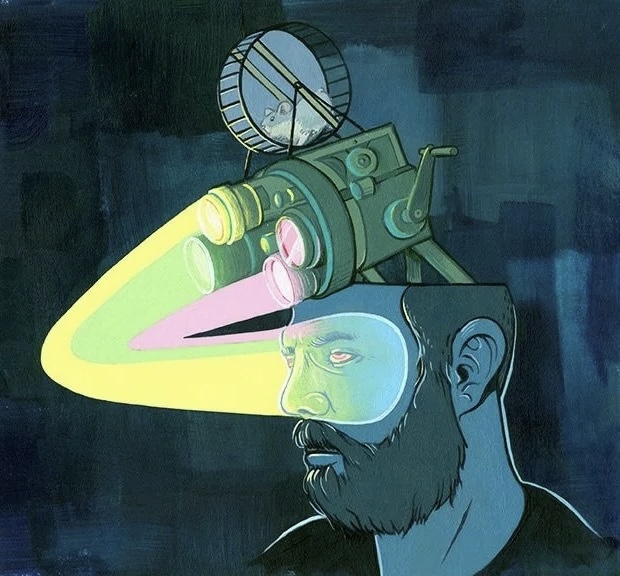
"Insomnia," illustration by Rick Reese.